Guide · Baker's notes
Understanding Flour Types: Plain, Strong, 00 and Everything Between
A clear guide to flour types for home bakers: protein, plain versus strong and self-raising, Italian 00, French T and German type numbers, rye and spelt.
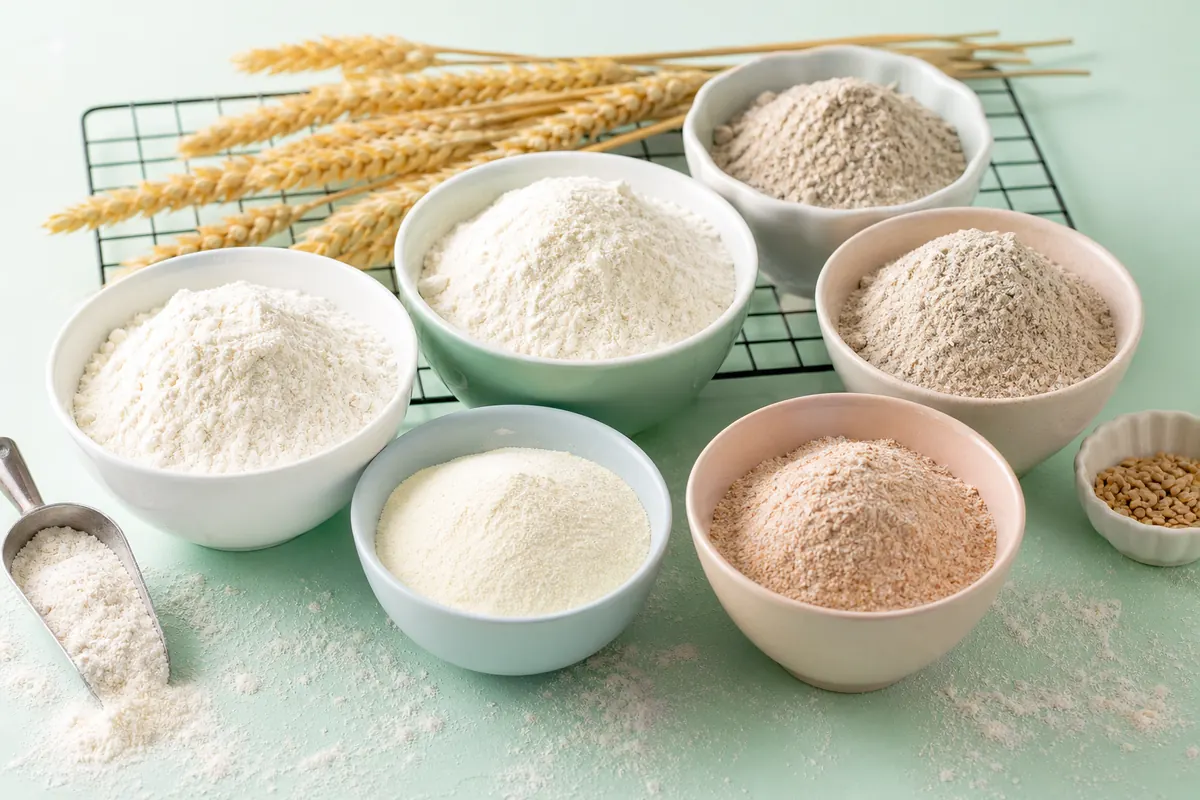
Walk down the baking aisle of a British supermarket and you will find half a dozen wheat flours before you even reach the speciality shelf. They are not interchangeable, and knowing what distinguishes them explains a great many baking successes and disappointments.
Protein is the key number
The figure that matters most is protein, printed on the nutrition panel of every bag. When wheat flour is mixed with water, two of its proteins, glutenin and gliadin, combine to form gluten, the stretchy network that traps gas and gives bread its structure. More protein generally means more potential gluten, and a chewier, stronger dough.
Plain flour typically has around 9 to 11 per cent protein. It is the all-rounder for pastry, biscuits, sauces and many cakes, where you want tenderness rather than chew.
Self-raising flour is plain flour with baking powder already mixed in, a British staple for sponges and scones. If you run out, add 2 teaspoons of baking powder to every 150g of plain flour and sift well.
Strong white bread flour usually has around 12 to 14 per cent protein, milled from harder wheat. It is the one for yeasted bread, pizza and enriched doughs that need to hold their shape.
Wholemeal flour contains the entire grain: bran, germ and endosperm. It tastes nuttier and absorbs more water, and the sharp bran particles cut through gluten strands, which is why loaves made with 100 per cent wholemeal are denser.
Continental labels
Recipes from abroad use other systems. Italian 00 and 0 grades describe how finely the flour is milled and how much of the outer grain has been removed, not its protein, so a 00 flour can be soft for cakes or strong for pizza – check the bag. French flours carry a type number such as T45, T55 or T65, and German ones numbers such as 405, 550 or 1050. These reflect the mineral, or ash, content: the higher the number, the more of the outer grain is included and the darker the flour. French T45 and German 405 are fine white flours for pastry and cakes, while French T150 is a wholemeal flour.
If you are curious about how milling and grading developed, and about flours made from grains other than wheat, the Wikipedia article on flour is a good general overview.
Beyond wheat
Spelt is an ancient relative of common wheat. Its gluten is more fragile, so spelt doughs need less kneading and are easy to over-mix. Rye forms very little useful gluten; rye breads rely instead on starches and gums called pentosans, plus the acidity of sourdough, to hold together. That is why rye loaves are dense and often baked in tins. Gluten-free blends combine rice, potato, tapioca and other starches, usually with xanthan gum to imitate gluten's binding power.
Storing flour
White flour keeps for months in a cool, dry cupboard, sealed against pantry moths. Wholemeal and rye go stale faster, because the oils in the germ turn rancid; buy them in smaller bags and use them within a few months, or keep them in the freezer. Check the date on self-raising flour too, since the baking powder in it slowly loses strength.
One last tip: when a recipe simply says 'flour', a British writer almost always means plain flour, while an American one means all-purpose flour, which is broadly similar but can be slightly stronger. If a cake from an American book turns out a little tough, try it with British plain flour next time.