Guide · Baker's notes
Baking Conversion Chart: Oven Temperatures, Cups, Spoons and Eggs
Our baking conversion chart: oven temperatures in °C, fan, °F and gas marks, US cups to grams for common ingredients, spoon and pint sizes, and egg weights.
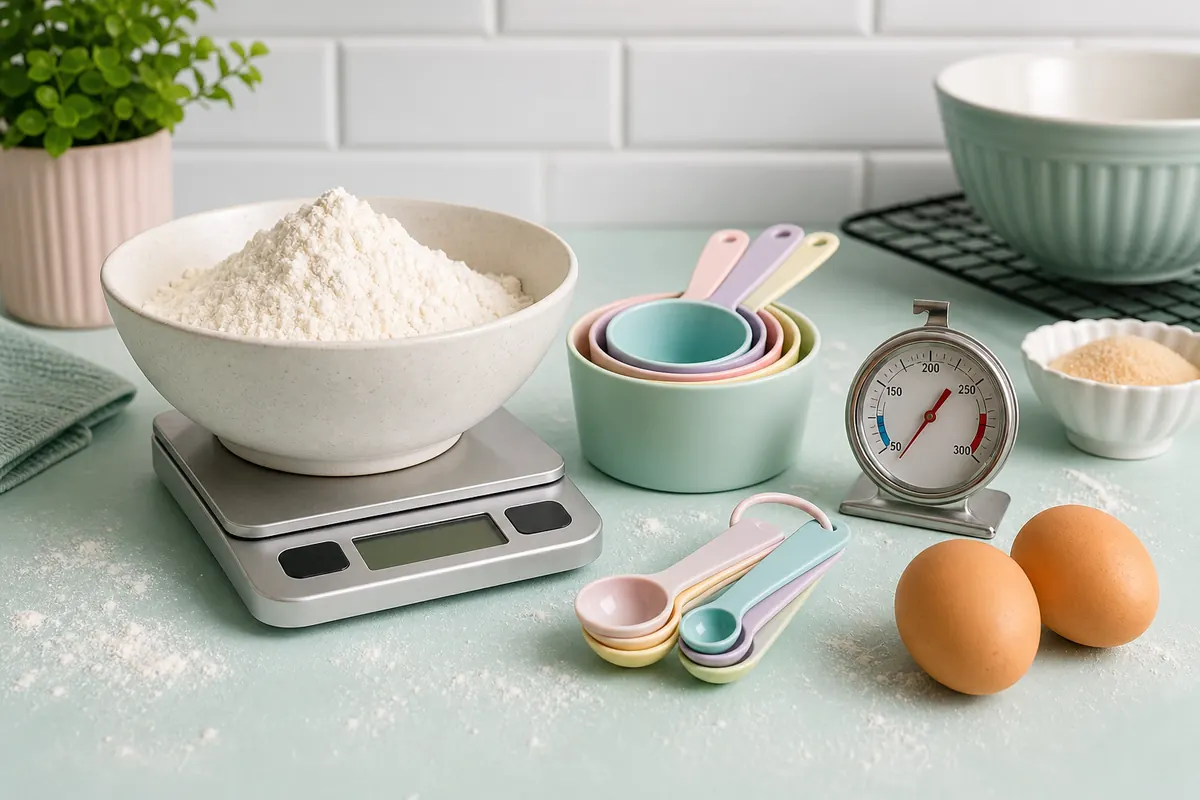
British, European, American and Australian recipes all measure things differently, and a recipe that works perfectly in one kitchen can fail in another because of a mistranslated cup or oven setting. Weighing in grams is the most reliable method, but this chart covers everything else.
Oven temperatures
| Conventional | Fan | Fahrenheit | Gas mark |
|---|---|---|---|
| 140°C | 120°C | 275°F | 1 |
| 150°C | 130°C | 300°F | 2 |
| 170°C | 150°C | 325°F | 3 |
| 180°C | 160°C | 350°F | 4 |
| 190°C | 170°C | 375°F | 5 |
| 200°C | 180°C | 400°F | 6 |
| 220°C | 200°C | 425°F | 7 |
| 230°C | 210°C | 450°F | 8 |
| 240°C | 220°C | 475°F | 9 |
Fan ovens circulate hot air and cook faster, so the usual guidance is to reduce the temperature by about 20°C. Ovens vary, though, so treat this as a starting point. Recipes on this site give both conventional and fan settings.
Cups to grams
An American cup is a measure of volume, roughly 240ml, so its weight depends entirely on what you put in it and how you fill it. Flour scooped straight from the bag can weigh a fifth more than flour spooned lightly into the cup and levelled. These are typical values:
| Ingredient | 1 US cup |
|---|---|
| Plain flour, spooned and levelled | about 125g |
| Caster or granulated sugar | about 200g |
| Light brown sugar, packed | about 220g |
| Icing sugar | about 120g |
| Butter | 227g (two US sticks) |
| Cocoa powder | about 85g |
| Rolled oats | about 90g |
| Honey | about 340g |
| Milk or water | 240ml |
Spoons and pints
A British or American tablespoon is 15ml and a teaspoon 5ml. Australian recipes use a 20ml tablespoon, so if you are baking from an Australian book, use a level tablespoon plus a teaspoon for each one. Pints differ too: a British pint is 568ml, while a US pint is 473ml, which matters a great deal in older custard and batter recipes.
Ounces and pounds
One ounce is 28.35g, but most British recipes round it to 25g or 30g, depending on the book. Older family recipes in pounds and ounces work best if you convert every ingredient at the same rate, so the ratios stay intact: 4oz becomes 110g or 115g, 8oz becomes 225g, and 1lb becomes 450g.
Eggs
British eggs are sold in weight classes: medium eggs weigh 53–63g and large eggs 63–73g in the shell. Most British recipes, including ours, assume medium eggs unless they say otherwise. American recipes usually mean a US large egg, which is close to a British medium. When in doubt, weigh: a typical white is around 30g and a yolk around 18g.
Tin sizes
To swap a round tin for a square one, remember that a square tin holds roughly the same as a round tin about 2.5cm wider, so a 20cm square tin is close to a 23cm round one. Moving from an 18cm to a 20cm round tin increases the area by almost a quarter, so the cake will be shallower and bake a little faster.
Why scales are worth having
If you bake often, a digital scale is the best few pounds you will spend in the kitchen. It removes the guesswork from cups and spoons, makes doubling or halving a recipe simple, and means fewer bowls to wash, because you can weigh each ingredient straight into the mixing bowl, pressing the tare button in between. Most scales also measure liquids in millilitres, since a millilitre of water weighs a gram. Milk is close enough for baking.