Guide · Baker's notes
Yeast Explained: Fresh, Active Dry and Fast-Action
A plain guide to the yeasts you can buy in Britain: how fresh, active dry and fast-action compare, how to swap one for another, and how to keep yeast alive.
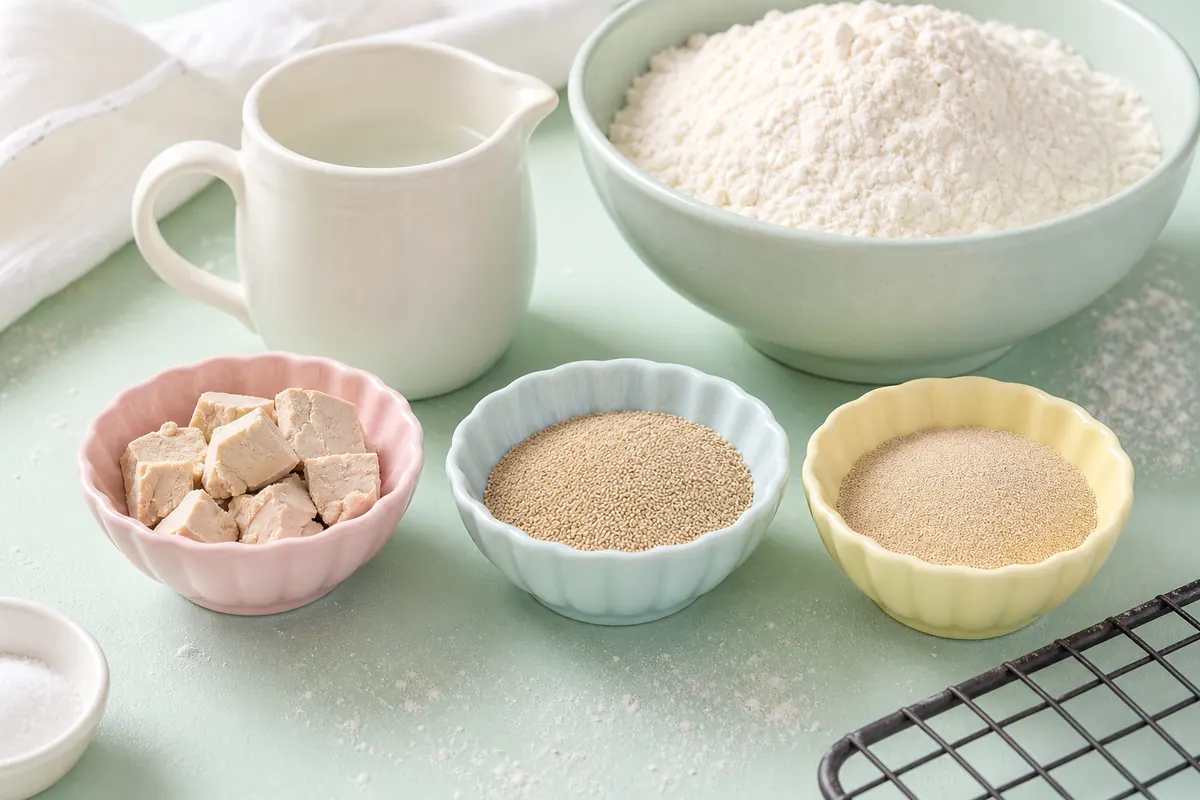
Walk down the baking aisle and you will find yeast in several guises: little green-and-white sachets, tins of granules, perhaps a block of fresh yeast at the bakery counter. They all do the same job, which is to feed on sugars in the dough and release carbon dioxide and flavour, but they behave differently and are not interchangeable gram for gram. Knowing which is which makes recipes from any source easier to follow.
Fast-action (easy-bake) yeast
This is the yeast most British recipes assume, and it is the yeast used in this site's recipes unless they say otherwise. The granules are fine and the yeast is ready to work as soon as it meets moisture, so you can stir it straight into the flour with no need to dissolve it first. A standard sachet is 7g, which is enough for 500g of flour. Because it is so convenient, it is the sensible choice for beginners and for anyone who bakes only occasionally.
Active dry yeast
Active dry yeast has larger granules, and it comes from the older tradition of dried baking yeast. It needs to be dissolved in warm water, around 35–40°C, with a pinch of sugar for about ten minutes before it goes into the dough. When it is working, the surface turns foamy and smells distinctly of bread. It is more common in American recipes, and it tends to work a little more slowly than fast-action yeast, which suits a long, relaxed rise.
Fresh yeast
Fresh yeast is a soft, crumbly, creamy-beige block, and it is the traditional choice of professional bakers, particularly for enriched doughs such as brioche and buns. Some supermarkets with an in-store bakery will give or sell you a small amount, and independent bakers often will too. It should smell pleasantly yeasty and crumble easily; if it is slimy, dark or smells sour, throw it away. Crumble it into lukewarm liquid and stir until it dissolves.
Swapping one for another
As a rough guide, if a recipe calls for one part of fast-action yeast, you can use about one and a quarter parts of active dry, or three parts of fresh. So a 7g sachet of fast-action is equal to roughly 9g of active dry or 20g of fresh yeast. These numbers are approximate rather than exact, and dough that is rich in butter, eggs or sugar may need a little longer to rise whichever you choose.
When you switch from fast-action to the other two, remember the method changes as well: dissolve active dry and fresh yeast in the warm liquid first, then add them to the flour. Going the other way, you can skip that step and add the dry yeast straight to the flour.
What kills yeast, and what slows it
Yeast is a living organism, and heat is its great enemy. Liquid hotter than about 50°C starts to damage it, and by 60°C it is dead, which is why recipes ask for lukewarm milk or water rather than hot. A good test is to dab a little liquid on the inside of your wrist: it should feel barely warm. Cold slows yeast down without harming it, which is why dough left in the fridge overnight develops more flavour while it rises slowly.
Salt, in large amounts, also slows yeast, as does a lot of sugar. For very sweet doughs, bakers sometimes use a type of yeast labelled for sweet doughs, which tolerates sugar better. For everyday loaves, simply keep the salt and yeast at opposite sides of the bowl when you add the flour, and mix them in thoroughly together.
Testing and storing
Old yeast is the most frequent reason for a dough that will not rise. If you are not sure about a sachet that has been in the cupboard a while, stir a teaspoon of yeast and a pinch of sugar into a small cup of warm water. Within ten minutes it should have formed a thick, bubbly foam. If it has not, it is time to buy a fresh packet.
Keep unopened sachets and tins in a cool, dry cupboard and check the date on the pack. Once a tin is open, a sealed container in the fridge keeps it lively for longer, and you can even freeze it. Fresh yeast lasts around two weeks in the fridge, wrapped tightly, and it freezes well in small portions, though it may take a little longer to wake up after thawing.
Which should you buy?
For most home bakers, fast-action yeast is the easiest and most reliable choice. Try fresh yeast if you bake a lot of enriched breads and have a source nearby. And if you would rather do without any of them, our sourdough starter guide shows how to grow your own wild yeast from flour and water.